13888888888



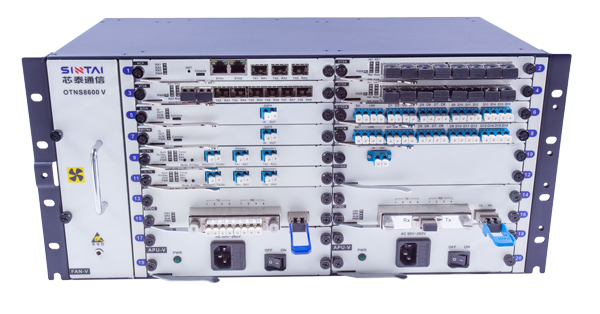
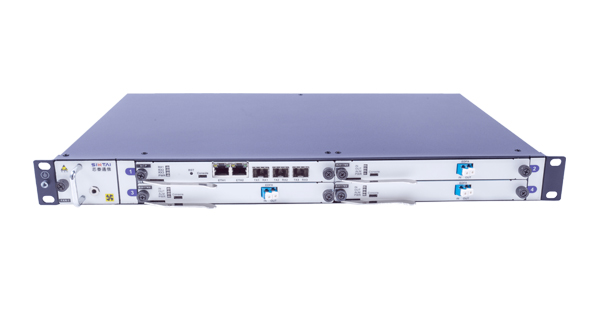
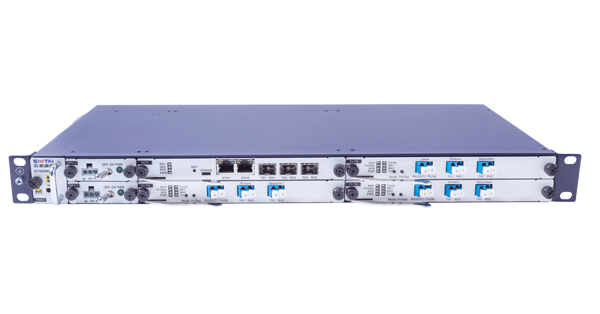
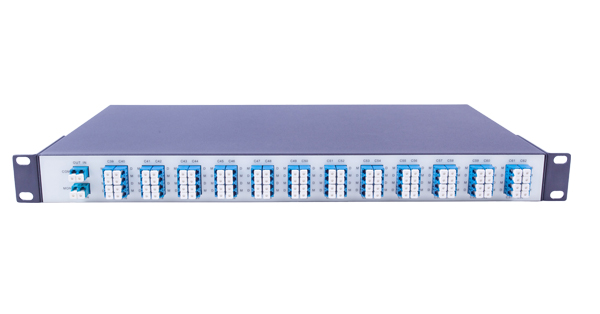
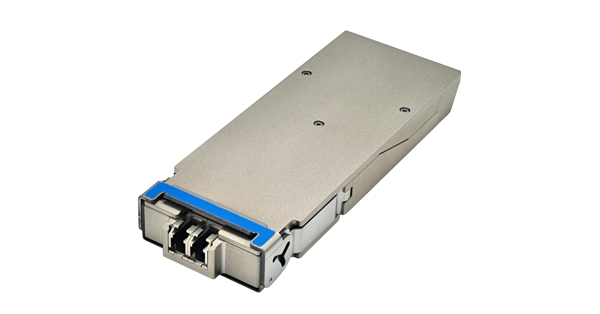
For metro to long-haul transmission, SINTAI develops 100G coherent DWDM transponder,100G noncoherent DWDM Transponder to support it. SINTAI also develops 4 Channels 40G &100G Transponder, multi-channels 25G Transponder, 10 port SFP+ DWDM/CWDM transponder and other 10G transponders to meet with different applications.
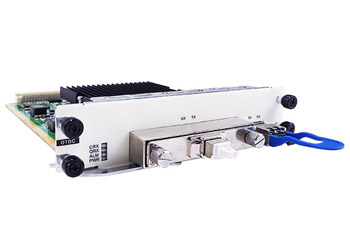



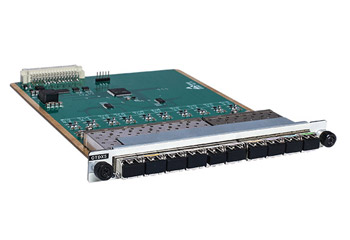


In optical transmission, both transponder and muxponder belong to OTU(optical transform unit)/wavelength conversion unit, the main function is to converge or convert one or multiple client-side signals after access, and output DWDM(according to ITU-T G.694.1 recommendation) or CWDM(according to ITU-T G.694.2 recommendation) standard wavelength, in order to facilitate the multiplexing unit can perform WDM on optical signals of different wavelengths.
Transponders are used to enable point-to-point connections over long distances when the client rate matches the optical wavelength. In cases where the client rates are lower than the optical wavelength.
A muxponder is the element that sends and receives the optical signal on a fiber in much the same way as a transponder except that the muxponder has the additional functionality of multiplexing multiple sub-rate client interfaces onto the line interface.
Transponder
N in N out: N* Low-speed client-side services==> N* Standard wavelength optical signals

4* 10G services ↔ 4* 10G services
Muxponder
N in One out: N* Low-speed client-side services ==> 1* High-speed standard wavelength optical signal
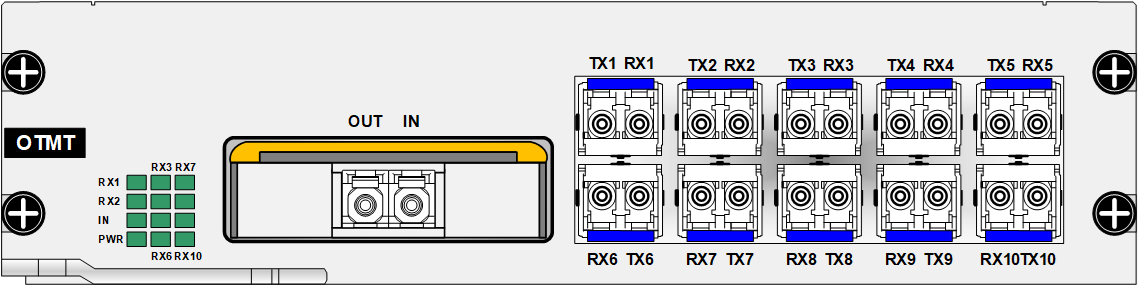
10* 10G any services ↔ 1* 100G
As a leader in optical transmission industry, SINTAI is now among the top professional OTU transponder manufacturers in China. We have the capability to supply different types of transponders to meet all your business needs. Contact us to get transponder price now!
OEO (Optical Electrical Optical) means optical→Electrical→optical. The optical signal to be amplified is first converted into an electrical signal, after 3R function (signal amplification, clock extraction, signal regeneration) and then converted into an optical signal, thereby playing a role in optical power amplification. It is mainly used to amplify a single signal at a low rate of 10Gbit/s or below one by one.

If the input is a weak optical signal, the output can be converted into a strong optical signal.
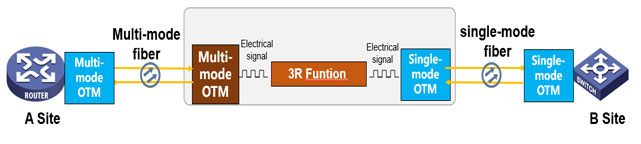
If it is a multi-mode fiber, it can be converted into a single-mode fiber.
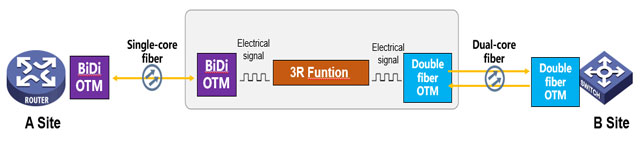
If it is a single-core fiber, it can be converted into a dual-core fiber.
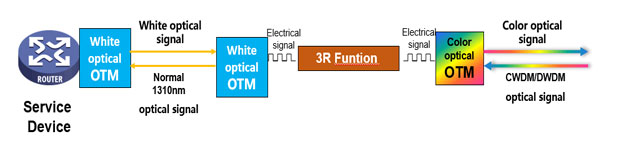
If it is a white optical signal, it can be converted into a color optical signal.
If one side is equipped with an electrical interface module and the other side is equipped with an optical interface module, the RJ45 electrical interface signal can also be converted into an optical signal.
Features:
北京市长安大厦123号
Supports the full range of 1260~1650nm working wavelength (depending on the OTM(Optical Transport Module) configured).
Multiple types of services are available, such as Ethernet, SDH, ATM, etc., and transparent transmission of access services.
Application scenarios support single fiber to dual fiber, wavelength conversion, mode conversion, optical signal shaping and optical power amplification.
Signal relay can be realized and the transmission distance can be extended (the distance depends on the OTM(Optical Transport Module) configured)
optical transponder is also CWDM or DWDM transponder,means optical-to-electrical-to-optical.it converts an optical signal to an electrical signal, and then recovers it to an optical signal.optical transponder converts client-side services into standard optical signals after re-amplifying, retiming, re-shaping.
optical transponder is needed in WDM system:
1.in a case where equipment of different wavelengths need to communicate with each other, the optical transponder can solve the incompatible problem between them.
2.there is more than one fiber optic network provided by different providers and of different standards. We need WDM transponder to traverse from one fiber optic network to another.


 English