
 www

It is very important for enterprises to understand the various magnetic application, so as to make full use of the characteristics of different magnets to better improve the product performance.
At present, there are two kinds of magnets that are most widely used: ferrite magnets and NdFeB magnets. NdFeB magnets were invented by Sumitomo Corporation in Japan in the 1980s. Ferrite magnets were invented by Philips company in the Netherlands in the 1940s and 1950s. So far, the technology of these two magnets has made a giant leap forward, and now magnet manufacturing is still improving to produce magnets that can produce a stronger magnetic field and make performance more stable.
Taking ferrite and NdFeB magnets for example. The main raw material of ferrite magnet is ferroferric oxide, plus some other metals. The main composition of NdFeB is the three chemical elements in its name: neodymium, iron, and boron. Among them, neodymium is a rare earth element, so NdFeB magnets are sometimes called rare earth magnets.
Classification by shapes: square magnet, tile magnet, special-shaped magnet, ring magnet, and circular magnet.
Classification by elements contained in magnets: samarium cobalt magnet, NdFeB magnet, ferrite magnet, aluminum nickel cobalt magnet, iron-chromium cobalt magnet, rubber coated magnets, and plastic magnet.
Classification by industry and magnet application: magnetic assembly, motor magnet, etc.
Magnets can be divided into permanent magnets and soft magnets. A permanent magnet is added up with strong magnetic field to make the spin of the magnetic substance is aligned with the angular momentum of the electron in a fixed direction. The soft magnet is added up with electricity (which is also a method of adding magnetic force), when the electricity is removed, the soft magnet will gradually lose its magnetism.
Application:
Magnet is widely used in industry, medicine, astronomy, military, and other trades and professions.
Physical process:
1.Compass;
2. Attract light and small objects;
3. Electromagnet can be used as an electromagnetic relay;
4. Motor;
5. Generator;
6. Electroacoustics;
7. Magnetic therapy;
8. Magnetic levitation;
9. Magnetic resonance imaging.
 Plastic Cased Magnet with HookApril 21, 2020These plastic cased ferrite hook magnets with elegant white appearance can be fixed on steel ceilings or other steel surfaces for hanging purpose with decorative effect.view
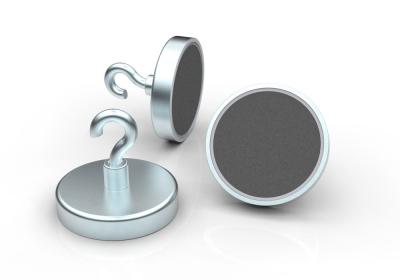 Ferrite Flat Pot Magnet with HookApril 21, 2020These ferrite hook magnets are widely used for hanging. Their holding force is lower than NdFeB hook magnets, but they are an economic choice.view
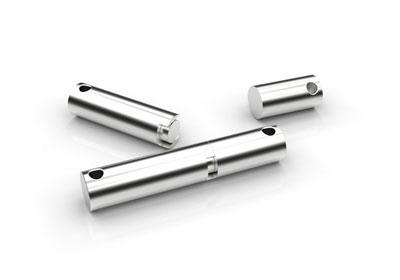 Memo Magnet Pick-UpApril 21, 2020An accessory specially designed for our memo magnet with brush finish, which makes it easy to remove the memo magnet as shown in below picture.view
 Call us on:
 Email Us:
北京市长安大厦123号