
 What are Fibre optics used for?
Optical fiber is used as a medium for telecommunication and computer networking because it is flexible and can be bundled as cables. It is especially advantageous for long-distance communications, because infrared light propagates through the fiber with much lower attenuation compared to electrical cables.
What is advantage of fiber optic cable?
Fiber Supports Very High Bandwidth Levels. When it comes to bandwidth, no currently available technology is better than fiber – especially singlemode fiber. Fiber optic cables provide more bandwidth to carry more data than copper cables of the same diameter
Does cold weather affect fiber optic cable?
Due to fiber optics sending light beams down the thin strands of glass rather than electrical signals, these cables are not affected by weather changes. Rain, cold and extreme heat can affect traditional electrical signals but do not have any affect on fiber optics.
What are the different sizes of fiber optic cable?
Let's talk about fiber optic types and core sizes. There are three common core sizes: 9/125, 50/125, and 62.5/125. Each of those numbers stands for a measurement, and that measurement is in microns.
What are the main components of a fiber optics system?
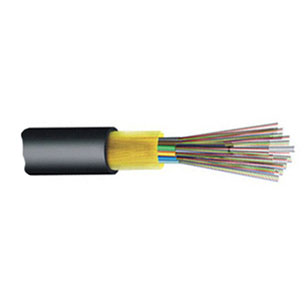
The three basic elements of fiber optic system components are the core, the cladding, and the coating. Core: This is the light transmission area of the fiber, either glass or plastic. The larger the core, the more light that will be transmitted into the fiber.

2022 Mid-Autumn Festival Holiday Notice
Sep 09 , 2022
The Types and Connection Methods of Fiber Pigtails
Mar 16 , 2022

The migration to 400G may come sooner than you think
Feb 22 , 2022



 English
 Español
 italiano
 русский
 português
 العربية
 tiếng việt
 Türkçe