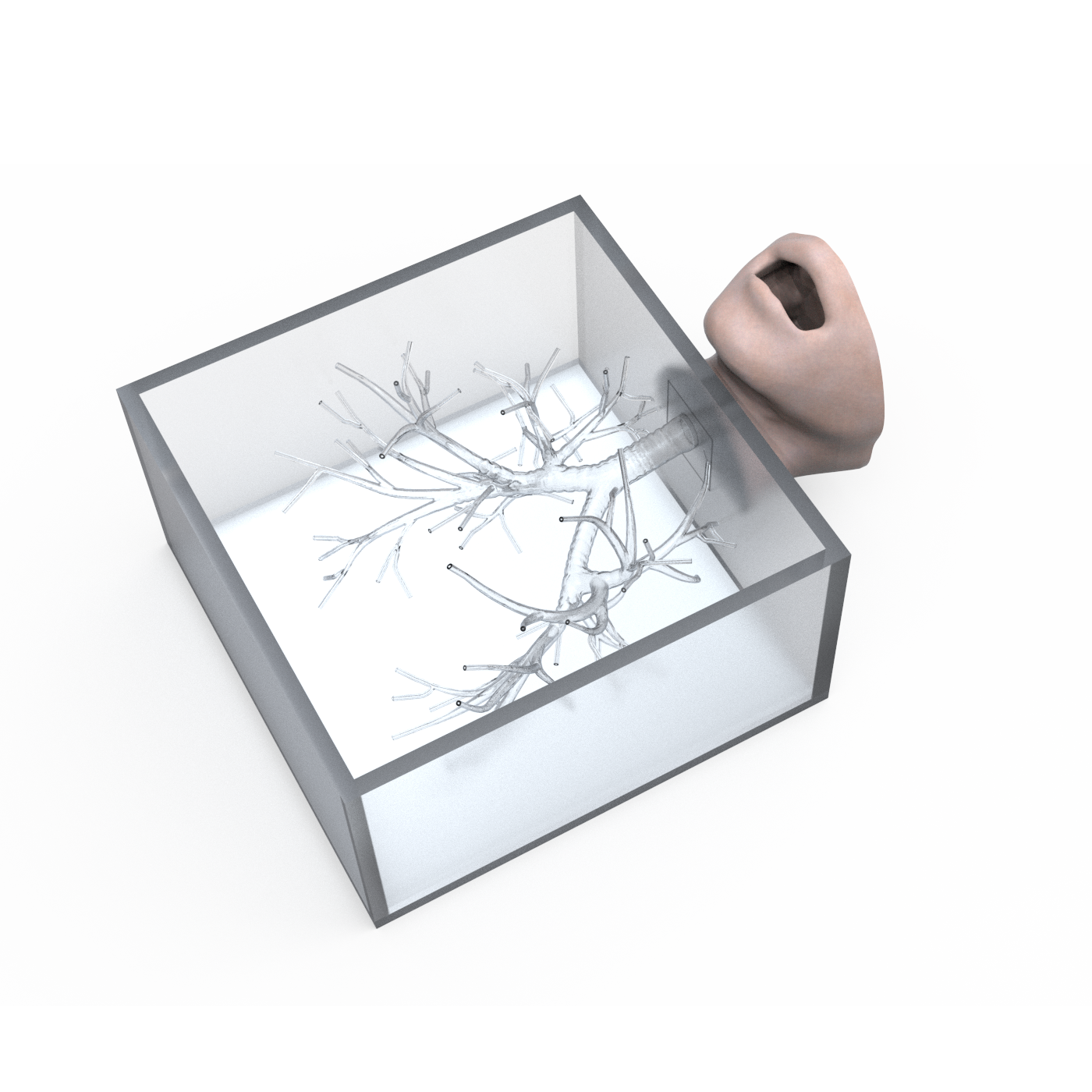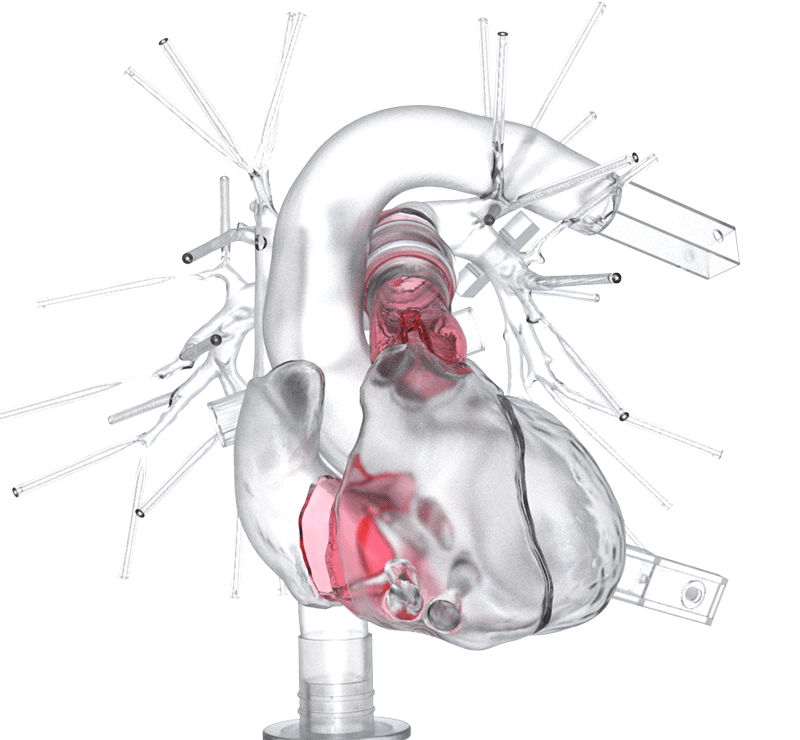

The client approached us to customize a model that could simulate the process of trans-radial artery puncture approach to help young physicians practice and master the surgical techniques of radial artery cannulation.
Model Design & Development:
Based on the real human vascular CT images and previous research literature, the model was designed to include the whole forearm and palm, with a total length of 43cm. The wrist joint of the palm is in the hyperextension state, and the body surface features such as the protrusion of the radial stem and the horizontal stripes of the wrist are obvious, which is convenient for puncture localization. There is a piercing area on the arm, which uses two different layers of material to simulate skin and muscle, making the touch and piercing feel real. The radial artery vessel was embedded in the puncture area, made of puncture resistant and self-healing soft adhesive material, and the relative position of the radial artery in the forearm was consistent with the real anatomical structure.
Model Solution:
The replaceable puncture area has two types of color, that is flesh color and transparent color, which are used for image-guided practice and visualization practice respectively.
Different forms of radial artery can be provided to help practice various difficulty of puncture skills along the artery.
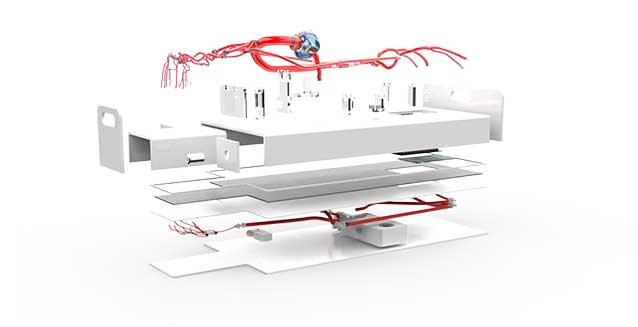
With pulsating pump, flow rate and pulse frequency can be adjusted to simulate radial artery pulsation, if the puncture is correct, there will be obvious arterial blood jet.
Procedure Overview:
Radial artery (RA) is one of the most commonly used arterial puncture sites. Compared with the transfemoral approach, the vascular complications at the puncture site were significantly reduced through the RA approach. Successful radial artery puncture is the premise of establishing radial artery approach and carrying out radial artery intervention successfully. It can be said that radial artery puncture is the first technical difficulty of radial artery intervention therapy, and failure of radial artery puncture is also the most common reason for the failure of radial artery coronary intervention. Mastering standard and reasonable puncture technique is beneficial to improve the success rate of radial artery puncture.

 Contact
 Quote
 Account
 Cart

 English