
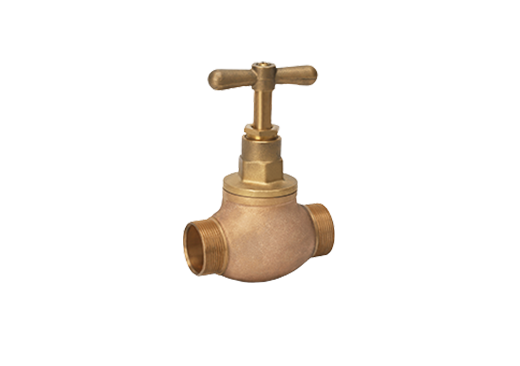
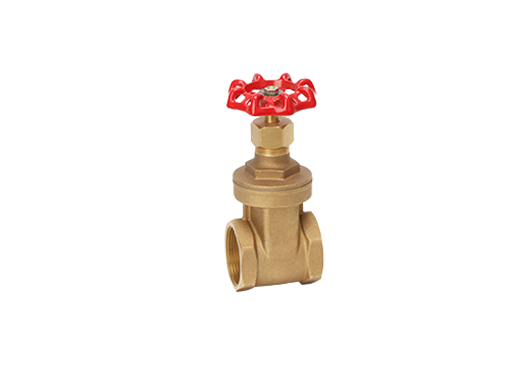

Gate valve and globe valve are the two most commonly used shut-off valves. The main differences between them are:
1. Differences in sealing surfaces
When the gate valve is opened and closed, the valve core and the valve seat sealing surface are always in contact and have friction with each other, so the sealing surface is easy to wear. Especially when the valve is close to the closed state, the pressure difference between the front and rear of the valve core is large, and the sealing surface wear is more serious; and once the valve clack of the globe valve is in the open state, there is no longer contact between its valve seat and the sealing surface of the valve clack, so the mechanical wear of its sealing surface is small, but if the medium contains solid particles, it is easy to damage the sealing surface. The sealing surface of the globe valve must be closed by a forced force to achieve sealing. Under the same caliber, working pressure and the same driving device, the driving torque of the globe valve is 2.5 to 3.5 times that of the gate valve. This point should be paid attention to when adjusting the torque control mechanism of the electric valve. The sealing surfaces of the globe valve contact each other only when they are completely closed, and the relative slip between the forcibly closed valve core and the sealing surface is very small, so the wear of the sealing surface is also very small.
2. Differences in structures
Gate valves are more complex in structure and larger in height than globe valves. From the perspective of appearance, gate valves are shorter and taller than globe valves. In particular, rising stem gate valve require a higher height space, which should be paid attention to when the installation space is limited.
3. Differences in flow resistances
When the gate valve is fully open, the entire flow channel is straight, and the pressure loss of the medium is the smallest at this time. Compared with the globe valve, its main advantage is that the fluid flow resistance is small. The flow resistance coefficient of the ordinary gate valve is about 0.08 to 0.12, while the resistance coefficient of the ordinary globe valve is about 3.5 to 4.5. The opening and closing force is small. The gate valve is usually suitable for the working conditions that it does not need to be opened and closed frequently, and the gate is kept fully open or fully closed. It is not suitable for adjustment and throttling. The flow resistance of the globe valve in the entire stroke is large, the unbalanced force is large, and the required driving force or torque is correspondingly much larger. But it is very suitable for fluid adjustment and throttling. For high-speed flowing media, the gate can cause vibration of the valve when the gate is partially opened, and the vibration may damage the sealing surface of the gate and the valve seat, and throttling will cause the gate to be eroded by the medium.
Different Carbo Valves For Sale
