
The Challenge:
The client approached us to customize a model to test their newly developed puncture kit and shunt balloon.
Model Design & Development:
Based on the real human vascular imaging and previous studies, the model was designed to contain the entire device operation path, namely, the jugular vein approach, through the entire vena cava, and to the hepatic vein and portal vein. The hepatic vein was type I, that is, the right hepatic branch merged into the inferior vena cava, and the middle and left hepatic branches merged into the inferior vena cava. The portal vein divides into the left and right branches (right anterior and right posterior branches) at the hilar. An artificial puncture channel was set at the glycerin vein about 2cm from the entrance of the inferior vena cava, and puncture instruments could enter the right main branch of the portal vein bifurcation after puncture.
Model Solution:
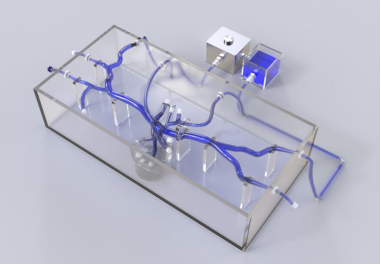
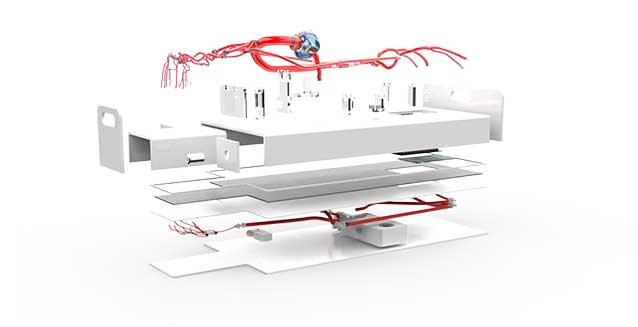
Transparent gel was placed in the artificial puncture channel to simulate the liver parenchyma, and the puncture felt real. The channel length matches the customer's instrument size. The whole model was fixed in a transparent acrylic box, and there was a supporting base under the hepatic portal vein to ensure the accurate relative position and direction of the blood vessels. Add transparent liver model to improve authenticity. With circulating pump to simulate vascular environment, improve the realism of operation.
Procedure Overview:
TIPS are Resumes invasive procedures used to treat portal hypertension. The liver parenchyma was punctured between the intrahepatic hepatic vein and portal vein to establish a portosystemic shunt channel to reduce portal pressure.

 Contact
 Quote
 Account
 Cart

 English