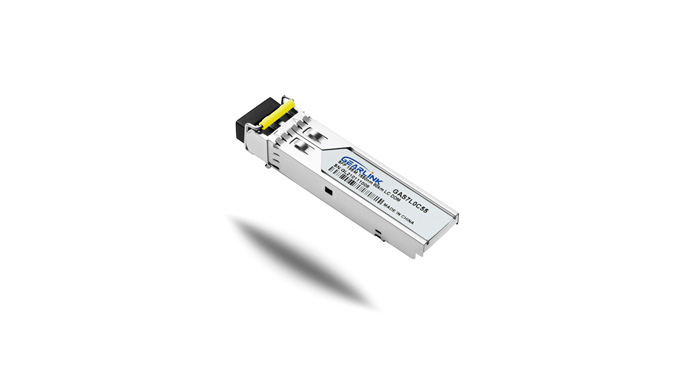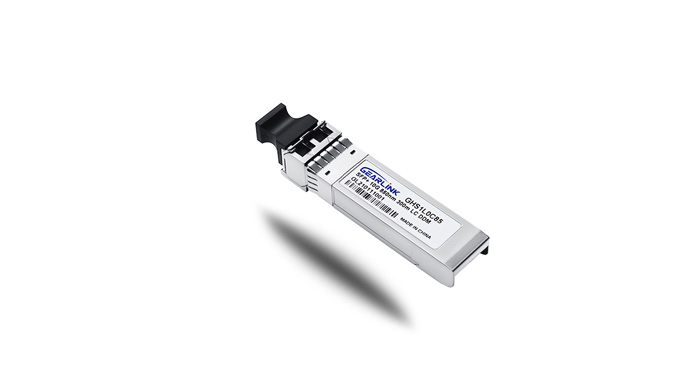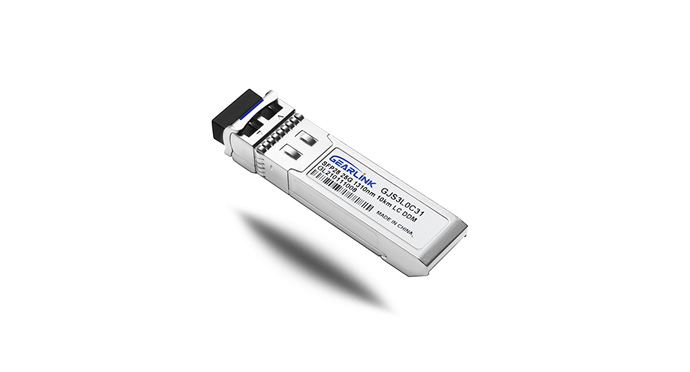
The optical transceiver is a photoelectric conversion module, whose function is to convert the electrical signal of the device into an optical signal, so that the optical signal is transmitted in the optical fiber, and then the optical signal is converted into an electrical signal after reaching the destination.
The optical transceiver is composed of optoelectronic devices, PCB boards and optical interfaces. The main components are TOSA (optical transmission), ROSA (optical reception), and BOSA (integrated optical transceiver).
The parameters of the optical transceiver mainly include transmission rate, center wavelength, transmission distance, single-mode/multi-mode, interface type, etc. Multi-mode has high loss but small dispersion during transmission and is suitable for short-distance transmission, while single-mode has low loss but large dispersion during transmission and is suitable for long-distance transmission.
1. Video optical transceiver: 1*9 single-mode optical transceiver is generally used, and some high-definition optical transceivers will also use SFP optical transceivers;
2. Optical fiber transceiver: adopt 1*9 and SFP optical transceiver;
3. Switch: The switch will use SFP, SFP+, XFP, QSFP+/QSFP28 optical transceivers, etc.;
4. Optical fiber router: generally use SFP optical transceiver;
5. Optical fiber network card: 1*9 optical transceiver, SFP optical transceiver, SFP+ optical transceiver, etc.;
6. Optical fiber high-speed dome camera: adopts SFP optical transceiver;
7. Base station: In the mobile communication system, the equipment that connects the fixed part and the wireless part, and connects to the mobile station through wireless transmission in the air, usually using SFP, XFP, SFP28 optical transceivers.