English

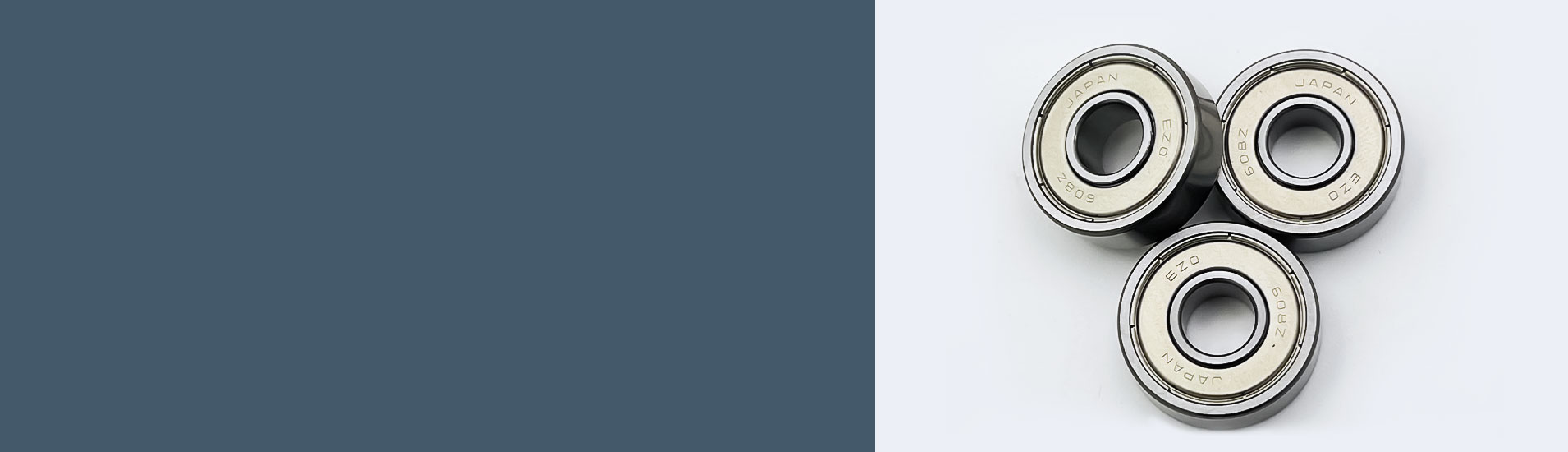
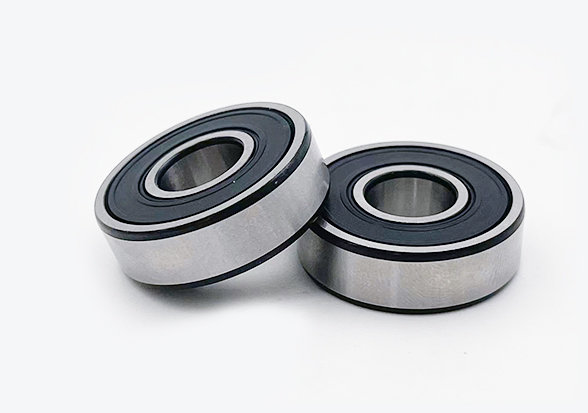
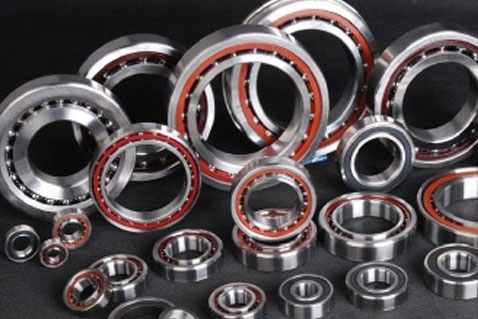
Angular contact ball bearings have inner and outer ring raceways that are displaced relative to each other in the direction of the bearing axis. This means that these bearings are designed to accommodate combined loads, i.e. simultaneously acting radial and axial loads.
The axial load carrying capacity of angular contact ball bearings increases as the contact angle increases. The contact angle is defined as the angle between the line joining the points of contact of the ball and the raceways in the radial plane, along which the combined load is transmitted from one raceway to another, and a line perpendicular to the bearing axis.
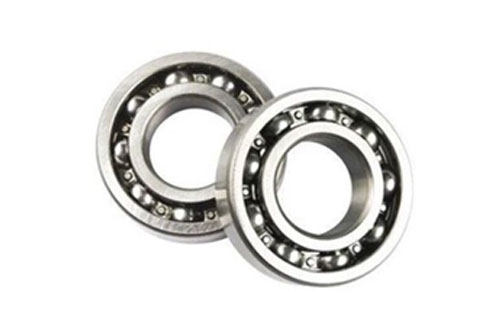
A radial ball bearing is a type of precision bearing where the action of the load transmitted is radial to the axis of the shaft. They are the most popular and widely used in industrial machinery applications because of their versatility.
Angular contact bearings have a much higher speed rating than radial bearings because of the nonstop contact of the balls to both rings.
Angular contact bearings can carry both radial and axial loads. The weight of the load is transferred from one ring to the other, through the balls, along a specific contact angle.
Angular contact bearings are ideal for use in gearboxes, pumps, electric motors, and clutches or other high-speed applications.
They are commonly used in the Materials Handling, Machine Tool, Steel Mill, and Wind Energy industries.
Although angular contact bearings can accept thrust loads in only one direction, they can be manufactured at different contact angles (usually between 0 and 45 degrees) to transfer the load acting upon the bearing.