English

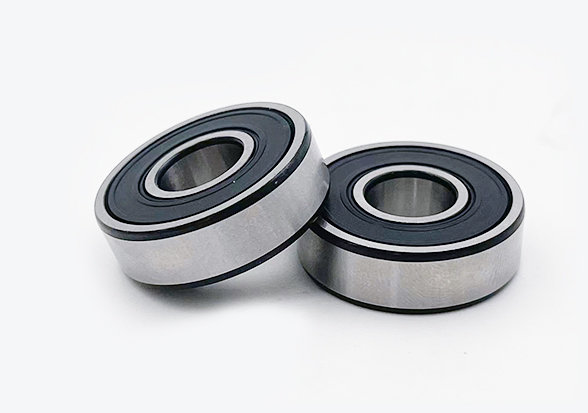
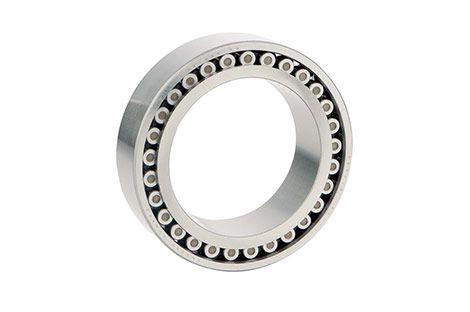
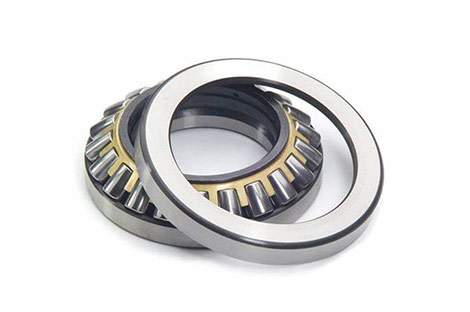
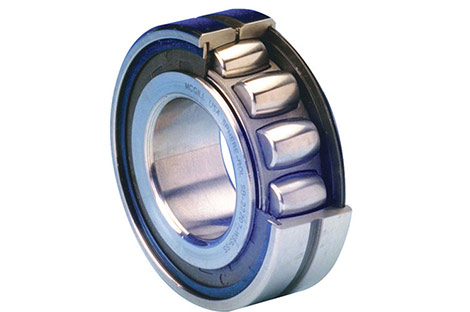
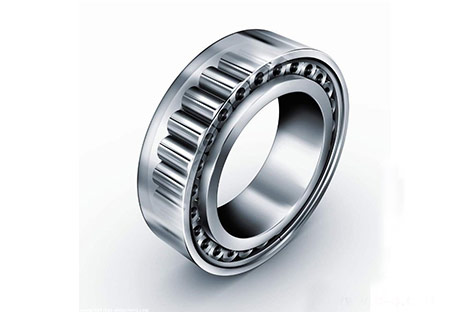
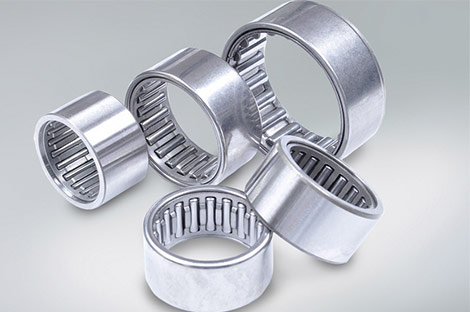
A roller bearing is one of the two types of rolling, or anti-friction bearings, the other being the ball bearing. A roller bearing has two grooved tracks, but instead of balls, roller bearings utilize rollers. The rollers may be cylindrical, spherical or tapered. If the rollers are cylindrical, only radial loads (perpendicular to the axis of rotation) can be carried, but with tapered or spherical rollers both radial and thrust loads can be carried. In a given space, a roller bearing can carry a greater radial load than a ball bearing can. This is because roller bearings utilize line contact to support loads, whereas ball bearings utilize point contact. Roller bearings are available in a wide array of bore sizes, from 15mm to 1000mm and larger are not uncommon.
Roller bearings are used in all main shaft and auxiliary drive shaft applications to support pure radial load.
They allow for axial shaft elongation due to temperature changes with no additional load effect on the bearing.
Roller bearings are used in a wide range of applications, from heavy equipment and machinery to power generation, manufacturing, and aerospace.