English

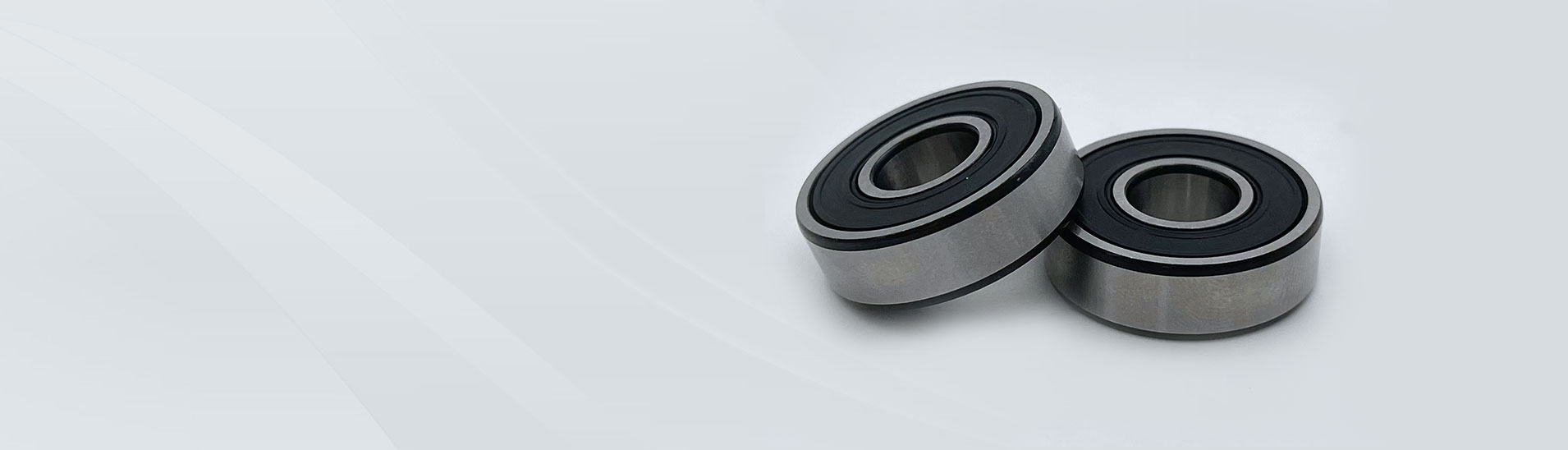
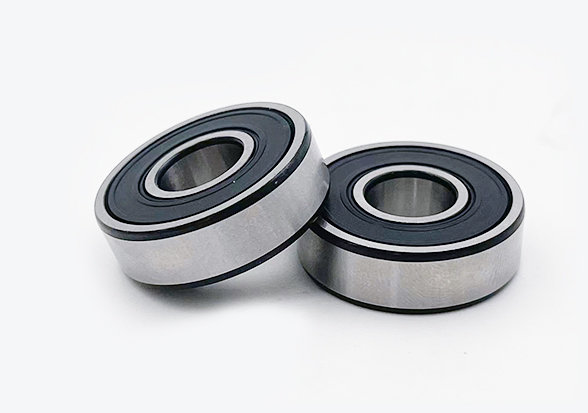
A bearing is a machine element that constrains relative motion to only the desired motion, and reduces friction between moving parts. The design of the bearing may, for example, provide for free linear movement of the moving part or for free rotation around a fixed axis; or, it may prevent a motion by controlling the vectors of normal forces that bear on the moving parts. Most bearings facilitate the desired motion by minimizing friction. Bearings are classified broadly according to the type of operation, the motions allowed, or to the directions of the loads (forces) applied to the parts.
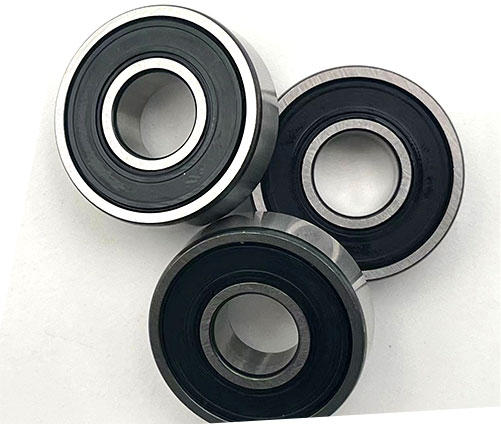
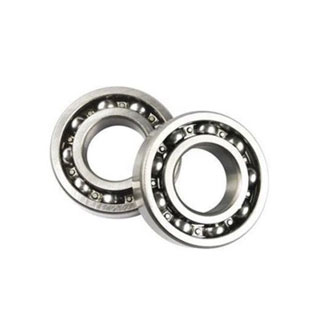
Ball bearings, are probably the most common type of bearing. They are found in everything from inline skates to hard drives. These bearings can handle both radial and thrust loads, and are usually found in applications where the load is relatively small.
Roller bearings like the one illustrated below are used in applications like conveyer belt rollers, where they must hold heavy radial loads. In these bearings, the roller is a cylinder, so the contact between the inner and outer race is not a point but a line. This spreads the load out over a larger area, allowing the bearing to handle much greater loads than a ball bearing. However, this type of bearing is not designed to handle much thrust loading.
Ball thrust bearings like the one shown below are mostly used for low-speed applications and cannot handle much radial load. Barstools and Lazy Susan turntables use this type of bearing.
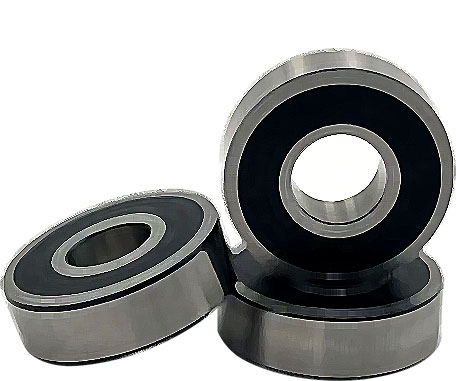
Measuring a bearing doesn’t need to be complex. We’ve put together the ultimate guide to measuring a bearing, to give you the confidence that you need to accurately measure and identify your bearings.
Read on to learn how to measure a bearing quickly and accurately.
The most common time that you’ll need to measure a bearing is after a bearing failure. When your bearing fails, you’ll need to quickly establish the size and type of bearing before you can order its replacement.
Whilst most bearings have their reference numbers laser stamped or engraved into them, these numbers often rub off over time. If you’re unable to read the reference number on the side of your bearing, you’ll need to measure the bearing to determine its size.
Once you’ve established the type and size of bearing, you can choose to order a like-for-like replacement, or to upgrade your bearings to potentially extend their service life.
Once you know what size bearing you need, you now need to establish which type and brand of bearing is best for your application. You might choose to do a like-for-like replacement, switching your bearing out for an exact replacement. However, we’d always recommend using bearing replacement as an opportunity to see if there is a bearing which is better suited to your application.
Not only will using the optimum bearing improve the running characteristics of your application, but it can also improve your energy efficiency and help to prevent premature.