The Use and Principle of Current Transformer Acrel Support Olympic Winter Games Beijing 2022 Power Supply Solution for Winter Olympics Wireless Temperature Solution at Beijing Daxing International Airport Acrel Releases ADW300 with 333mV Access Energy meters used in urban comprehensive pipe gallery projects Working Principles and Wiring of Various Types of Electric Meters Digital Electric Energy Meter VS Electronic Electric Energy Meter Problems and Common Fault Analysis of Current Transformers During Operation Detection and Marking of Current Transformers The Functions and Working Principles of Current Transformers Application of DC Current Meters in Substation DC Measurement Operation Methods and Precautions of Current Transformers The Detection and the Open Circuit Fault Inspection of Current Transformers Models, Structures and Installation Methods of Different Hall Current Sensors The Working Principles of the DC Current Shunts How to Set the Temp and Humidity Controller? Precautions of Multifunction Meter Storage Principle and Characteristic Parameters of Hall Current Sensor Multi-function Instrument Definition and Troubleshooting The Use of Prepayment Energy Meter and Its Advantages over Induction Meter Basic Functions of Smart Prepaid Electricity Meter in Student Dormitories How to Use the Multi Function Energy Meter? What Functions Does It Have? Factors That Affect the Performance and Use Value of Prepayment Energy Meter Application of ​IoT Based Electricity Energy Meter Application of Wireless Temperature Sensor in Press What is the Significance of Smart Energy Meter Applications? Smart Energy Meter Application What Are the Common Faults of Current Transformers? Operation Precautions of Current Transformers and the Cause of Burning The Principle and Use of Through-core Current Transformers The Wiring Principle of Current Transformers Design Features of Wireless Temperature Sensors Errors of Daily Current Transformers

The Use and Principle of Current Transformer


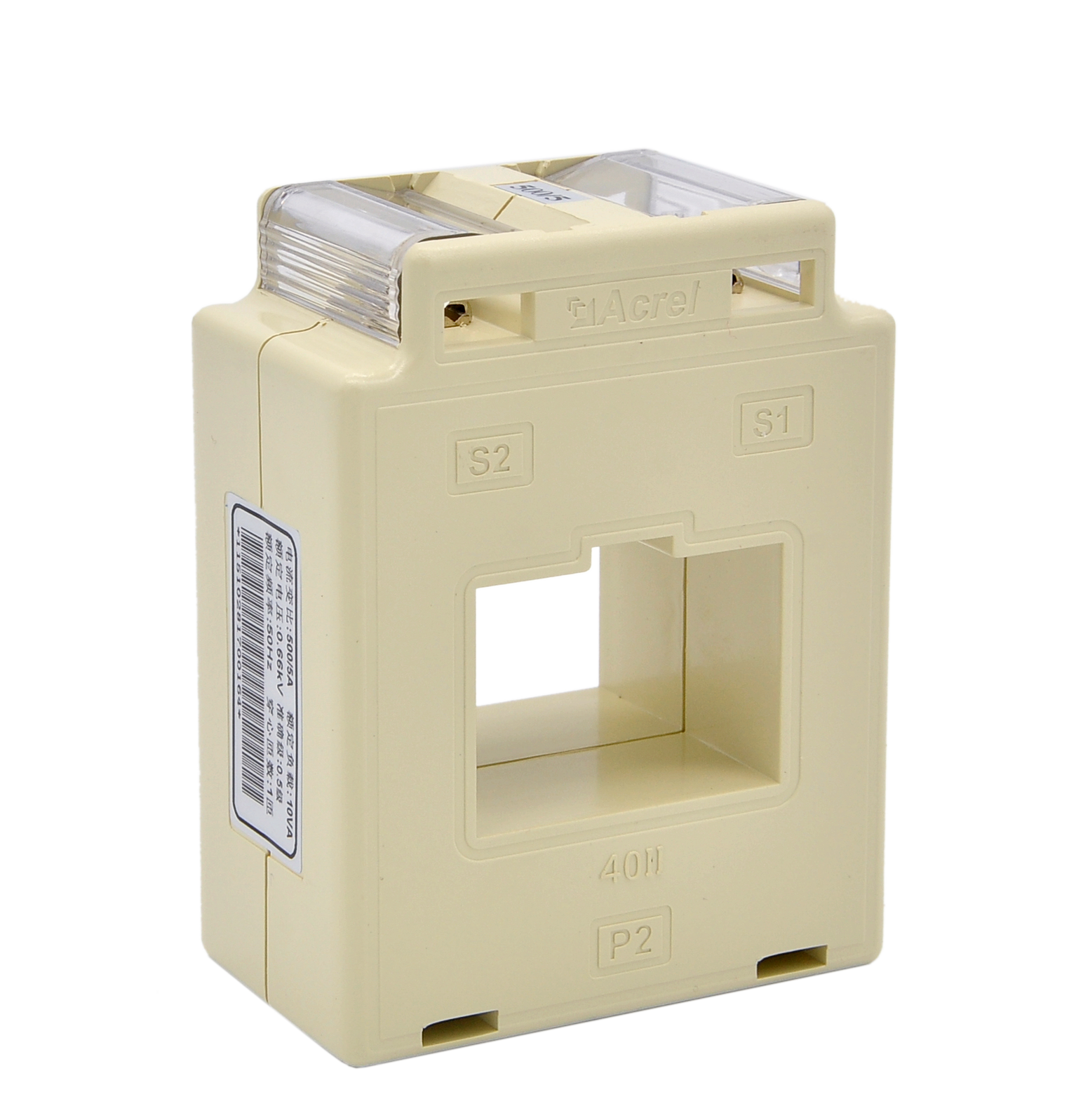
For example, there is a very thick cable now, and its current is very large. If you want to measure its current, you need to disconnect the cable and connect the ammeter in series in this circuit. Because it is very thick and the current is very large, a very large ammeter is required. But in fact, there is not such a big ammeter, because the specifications of current meters are all below 5A. then what should we do? At this time, a current transformer is needed.


Use of current transformer


1) The wiring of the current transformer should follow the series principle: that is, the primary winding should be connected in series with the circuit under test, while the secondary winding should be connected in series with all instrument loads

2) According to the measured current, select the appropriate change, otherwise, the error will increase. At the same time, one end of the secondary side must be grounded to prevent the primary side high voltage from entering the secondary low voltage side once the insulation is damaged, causing personal and equipment accidents

3) No open circuit on the secondary side is allowed. Once the circuit is opened, the primary side current I1 will all become magnetizing current, causing φm and E2 to increase sharply, causing excessive saturation magnetization of the iron core, severe heating and even burning of the coil; at the same time, the magnetic circuit will be over-saturated and magnetized. , Make the error increase. When the current transformer is working normally, the secondary side is similar to a short circuit. If it is suddenly opened, the excitation electromotive force will suddenly change from a small value to a large value, and the magnetic flux in the iron core presents a severely saturated flat top. Therefore, the secondary winding will induce a very high peak wave when the magnetic passes through zero, and its value can reach thousands or even tens of thousands of volts, which threatens the safety of workers and the insulation performance of instruments.   In addition, an open circuit on the secondary side causes E2 to reach several hundred volts, which will cause an electric shock if touched. Therefore, the secondary side of the current transformer is equipped with a short-circuit switch to prevent the primary side from opening. K0 in Figure 1, during use, once the secondary side is open, the circuit load should be removed immediately, and then stop processing. It can be reused after everything is handled.

4) In order to meet the needs of measuring instruments, relay protection, circuit breaker failure judgment, and fault recording, etc., in the circuits of generators, transformers, outgoing wires, bus section circuit breakers, bus tie circuit breakers, bypass circuit breakers, etc. All are equipped with current transformers with 2-8 secondary windings. For large-current grounding systems, generally three-phase configuration; for low-current grounding systems, two-phase or three-phase configuration according to specific requirements

5) The installation location of the protective current transformer should be set as far as possible to eliminate the unprotected area of the main protective device. For example: if there are two sets of current transformers and the location permits, they should be installed on both sides of the circuit breaker, so that the circuit breaker is in the cross-protection range

6) In order to prevent the busbar fault caused by the flashover of the pillar current transformer bushing, the current transformer is usually arranged on the outgoing line or transformer side of the circuit breaker

7) In order to reduce the damage caused by the internal fault of the generator, the current transformer used for the automatic adjustment of the excitation device should be arranged on the outlet side of the generator stator winding. In order to facilitate analysis and find internal faults before the generator is incorporated into the system, the current transformer used for the measuring instrument should be installed on the neutral side of the generator.


Principle of current transformer


In the power supply lines, the difference in current and voltage varies from a few amperes to tens of thousands of amperes. In order to facilitate the measurement of the secondary instrument, it needs to be converted into a relatively uniform current. In addition, the voltage on the line is relatively high, such as direct measurement, which is very dangerous. The current transformer plays the role of current conversion and electrical isolation. Earlier, most of the display instruments were pointer-type current and voltmeters, so the secondary current of the current transformer was mostly ampere-level (such as 5A, etc.).

The current ratio between the primary winding current I1 of the current transformer and the secondary winding I2 is called the actual current ratio K. The current ratio of the current transformer when it works at the rated operating current is called the current transformer rated current ratio, which is represented by Kn.

Kn=I1n/I2n


Related Articles about Acrel

Products

Products

Popular Acrel Energy Meter Products Recommended