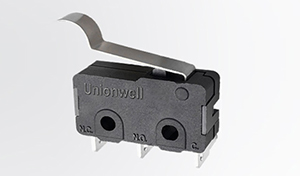
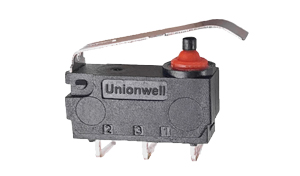
Structure And Working Principle Of Snap Action Micro Switch
1. The Components Of The Snap-Action Micro Switch
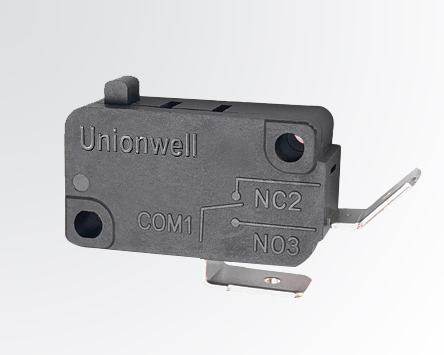
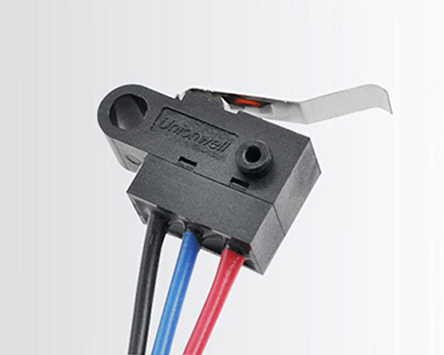
Snap action micro switches are widely used in daily life. They are small in size and generally consist of five main parts:
a. Actuator part: The actuator part of the snap-action micro switch transmits the force or stroke from the outside to the internal mechanism;
b. Contact part: The contact part of the snap-action micro switch is responsible for actually opening or closing the electrical circuit;
c. Shell part: The shell part has good insulation and high mechanical strength, which is used to protect the internal mechanism;
d. Quick-action mechanism: The quick-action mechanism adopts high-quality conductive spring material to perform quick-action action;
e. Terminal part: The terminal part of the snap-action micro switch is used to connect with the external circuit.
2. The Working Principle Of The Snap Action Micro Switch
The external mechanical force acts on the action reed through transmission elements (pressing pins, buttons, levers, rollers, etc.), and when the action reed is displaced to the critical point, an instantaneous action occurs, making the moving contact at the end of the action reed and the fixed contact point to switch on or off quickly. When the force on the transmission element is removed, the action reed generates a reverse action force, and when the reverse stroke of the transmission element reaches the action critical point of the reed, the reverse action is completed instantaneously. The contact distance of the micro switch is short, the action stroke is short, and the on-off is fast according to the power. The action speed of the moving contact has nothing to do with the action speed of the transmission element. Micro switches are used in many aspects, such as household appliances, automotive electronics, communication equipment, military products, testing instruments, gas water heaters, gas stoves, microwave ovens, rice cookers, floating ball equipment, medical equipment, building automation, power tools And general electrical and radio equipment, 24-hour timer, etc.